Brandon Armstrong Cut After DWTS Finale Prosthetic Incident
Brandon Armstrong Shows Cut After DWTS Finale Incident
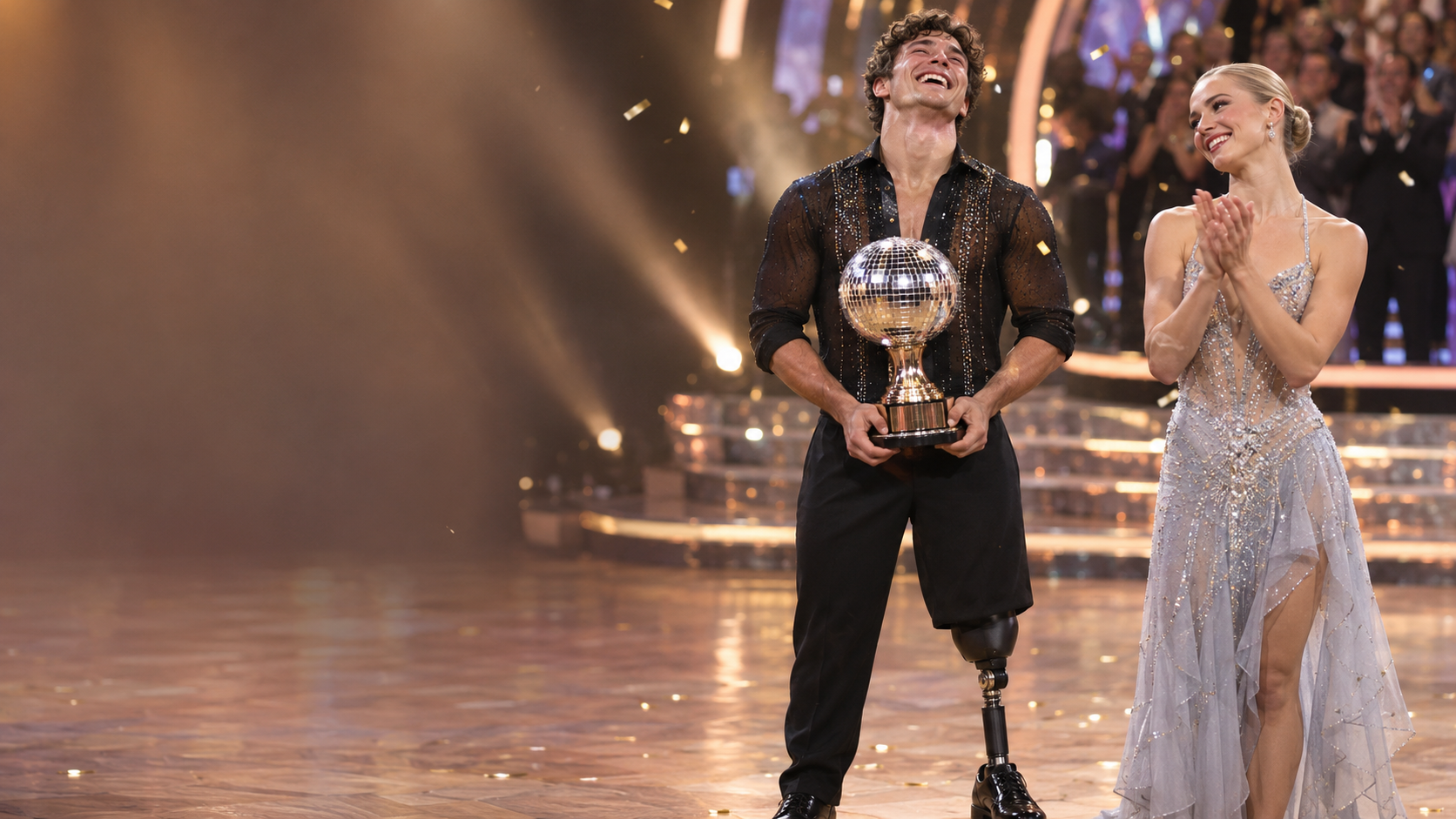
Brandon Armstrong reportedly showed a cut after Ezra Frech’s prosthetic leg struck him during the Dancing With the Stars finale. The incident occurred during a live final performance involving Armstrong, a DWTS professional dancer, and Frech, a Paralympic athlete.
Reports describe injuries involving both performers, but the available coverage does not establish the exact sequence of events, the severity of the injuries, or the medical treatment either performer received.
The accounts come from separate outlets that describe the same moment from different angles. E! News focused on Armstrong and the cut he displayed. USA Today covered an injury involving Armstrong and Frech’s prosthetic. Parade reported that both performers suffered bloody injuries during the final performance. A further report said Armstrong showed a piece cut from Frech’s prosthetic leg. None of the supplied coverage includes an on-the-record statement from Armstrong, Frech, or the production, and none places the contact at a specific point in the routine beyond “during the finale.”
That gap matters. A live performance produces a single visible moment, but the explanation for that moment — choreography, spacing, equipment, an accident — lives in details that the reports do not supply.
What Happened to Brandon Armstrong?
E! News reported that Frech’s prosthetic leg hit Armstrong and that Armstrong later showed a cut. USA Today also covered an injury involving Armstrong and Frech’s prosthetic leg.
The available reports do not explain whether the contact resulted from planned choreography, an accidental movement, limited spacing, or another performance-related event. They also do not assign blame or indicate that Frech intentionally injured Armstrong.
Armstrong’s cut attracted attention because he displayed it after a high-profile live performance. However, the supplied coverage does not confirm its location, depth, treatment, or effect on his later appearances.
What the Two Outlets Agree On
The E! News and USA Today accounts converge on three points: Armstrong is a DWTS professional, Frech is a Paralympic athlete, and Frech’s prosthetic leg was involved in contact with Armstrong during the finale. Those three points are the most stable elements in the coverage and the least likely to shift as more reporting appears.
Everything beyond them — the mechanics of the contact, what happened to the prosthetic, what happened to Armstrong’s skin — rests on descriptions that have not been independently detailed in the supplied material.
Why “Showed a Cut” Is a Narrow Claim
A cut is a visible injury, and “showed” describes a display rather than a diagnosis. The phrasing establishes that Armstrong presented the injury to view. It does not establish when the cut occurred relative to the contact, whether it needed closing, or whether it was the only injury he sustained. Readers should treat the phrase as a report of something visible, not a medical summary.
Reports Mention Injuries Involving Both Performers
Parade reported that Frech and Armstrong suffered bloody injuries during their final performance. The available summary does not identify the precise injuries, explain how they occurred, or provide medical updates.
That account adds context but does not establish the full sequence of events. The safest conclusion is that reports described injuries involving both performers during the finale.
What “Bloody Injuries” Does and Does Not Tell You
The Parade account is broader than the others because it covers both performers in one sentence. Its value is that it removes the impression of a one-sided incident: whatever happened during the performance, the reporting does not frame it as harm to a single person.
Its limitation is precision. “Bloody injuries” describes visible blood, not a category of wound. It does not establish which performer was injured first, whether the injuries were connected, or whether either performer was examined afterward. The summary also provides no medical update, so nothing in the supplied coverage describes recovery or aftercare for either person.
How the Accounts Fit Together
The three news accounts are compatible with one another: a contact involving a prosthetic leg, a visible cut on Armstrong, and visible injuries to both performers. Read together, they describe a physically messy final performance. Read separately, each leaves the cause unstated. No supplied report connects the injuries into a single confirmed chain of cause and effect.
The Reported Prosthetic Piece
A separate report said Armstrong showed a piece cut from Frech’s prosthetic leg. The available summary does not explain when the piece was removed, who removed it, or how it related to Armstrong’s cut.
Those details should remain separate from the report that Armstrong showed a cut on his body. The supplied coverage does not establish whether the piece caused the cut, broke away during the collision, or was displayed afterward for another reason.
Why the Piece and the Cut Are Separate Claims
Two distinct statements sit side by side here. One concerns Armstrong’s body. The other concerns an object. Merging them produces a tidy story — a fragment of prosthetic cut the dancer — that no supplied source actually confirms.
Keeping them apart preserves accuracy and keeps the reader alert to the difference between what was shown and what was inferred. A displayed piece establishes that a piece existed and was shown. It does not establish provenance, timing, or causation.
Questions the Report Leaves Open
- Was the piece detached before, during, or after the performance?
- Did it come from a structural part of the prosthetic or from a covering?
- Was it kept as a keepsake, examined, or returned?
- Did Frech’s equipment require repair or replacement afterward?
None of these are answered in the supplied material.
Ezra Frech’s Prosthetic Leg and the Performance
Frech’s prosthetic leg was involved in the reported contact with Armstrong. The reports do not suggest that Frech deliberately injured Armstrong or that prosthetic equipment is inherently dangerous.
A prosthetic limb is part of how many athletes and performers move through sport, work, and public life. This account concerns one reported collision during one live performance, not a general judgment about adaptive equipment or adaptive athletes.
The available information does not confirm whether Frech’s prosthetic was damaged, repaired, or altered after the incident.
What the Reports Do Not Say About Frech
Frech appears in the coverage primarily through his equipment. The reports do not describe his condition beyond the Parade reference to a bloody injury, do not describe his reaction, and do not suggest fault on his part. Frech is identified as a Paralympic athlete, and the reporting treats the contact as an event within a performance rather than as a matter of conduct.
Why One Incident Does Not Generalize
Live performance carries physical risk for every participant: proximity, momentum, costumes, props, and equipment all interact in real time. A single reported collision involving a prosthesis is a data point about one routine on one night. Treating it as evidence about adaptive athletes or prosthetic limbs in general would go beyond anything the supplied reporting supports.
What Remains Unclear
The supplied reports do not establish:
- The precise choreography at the moment of contact
- Whether the contact was accidental or planned
- How the prosthetic moved or became damaged
- Whether the displayed piece came from the collision
- The location, depth, or treatment of Armstrong’s cut
- The full extent of Frech’s reported injury
- Whether the performance was interrupted, changed, or rescored
More specific claims require a verified statement from Armstrong, Frech, Dancing With the Stars, the production, or reliable follow-up reporting.
How to Read Partial Reports About a Live TV Incident
Coverage of a live broadcast often arrives in fragments, because outlets publish quickly and details accumulate afterward. A few habits prevent overreading:
- Separate the visible from the explained. A cut and a piece of equipment were shown; the cause was not established.
- Track which outlet says what. E! News and USA Today addressed Armstrong and the prosthetic contact; Parade addressed both performers. Attributing each claim keeps the record clean.
- Watch for merged claims. Combining the cut and the prosthetic piece creates a causal story the sources do not tell.
- Distinguish display from diagnosis. Showing an injury is not the same as describing its severity or treatment.
- Wait for a primary statement. Performers, the show, and the production are the parties positioned to confirm sequence and medical status.
Frequently Asked Questions
What happened to Brandon Armstrong during the DWTS finale?
Reports say Ezra Frech’s prosthetic leg struck Armstrong during the finale, after which Armstrong showed a cut. The full sequence of events remains unclear.
Did Ezra Frech intentionally hit Brandon Armstrong?
The supplied reports do not indicate that Frech intentionally injured Armstrong. They describe contact during the final performance without explaining its precise circumstances.
Was Ezra Frech also injured?
Parade reported that both Frech and Armstrong suffered bloody injuries. The available summary does not provide the full extent or medical details of Frech’s injury.
Did Armstrong need medical treatment?
The supplied sources do not confirm whether Armstrong received stitches, emergency care, or other treatment.
Did the incident change the finale result?
The available reports do not say whether the routine was interrupted, changed, or rescored, or whether the incident affected the finale’s result.
What was the piece cut from Frech’s prosthetic leg?
A report said Armstrong showed a piece cut from the prosthetic. The supplied summary does not explain when or how it was removed, who removed it, or whether it related to Armstrong’s cut.
Have Armstrong, Frech, or the show commented?
The supplied coverage contains no statement from Armstrong, Frech, Dancing With the Stars, or the production. Confirmation of sequence, severity, and treatment would most likely come from those parties or from follow-up reporting.
Why does the coverage leave so much unexplained?
Because it describes what was seen during a live broadcast — contact, a cut, a piece of equipment — rather than what was established afterward. Visible events and verified explanations arrive on different timelines.
Related Articles
-
 Jen Affleck, Zac Affleck Reunite for Thanksgiving
-
 Sunrise on the Reaping Targets $85 Million Thanksgiving
-
 Melissa Gilbert Thanks Supporters of Timothy Busfield
-
 Alan Bersten Speaks After Helping Ezra Frech on DWTS
-
 Horoscope for November 26, 2026: All Zodiac Signs
-
 Andy Taylor Death Report: What Is Confirmed
-
 Pitt and Jolie Settle Château Miraval Winery Lawsuit
-
 Ezra Frech Wins Dancing with the Stars Season 35
-
 Avengers: Doomsday Eyes $270M Opening as Dune 3 Builds
-
 Joan Smalls Confirms Fallout With Candice Swanepoel
-
 Andy Taylor: Duran Duran Guitarist and Legacy
-
 Gordon Ramsay Reportedly Set to Host Top Gear in 2028
-
 Macy’s Thanksgiving Parade Postponed Due to Weather
-
 Andy Taylor Reportedly Dies at 65: Career and Legacy
-
 Brad Pitt and Angelina Jolie Settle Miraval Legal Dispute
-
 Blade Runner 2099 Goes Beyond AI, Stars Say